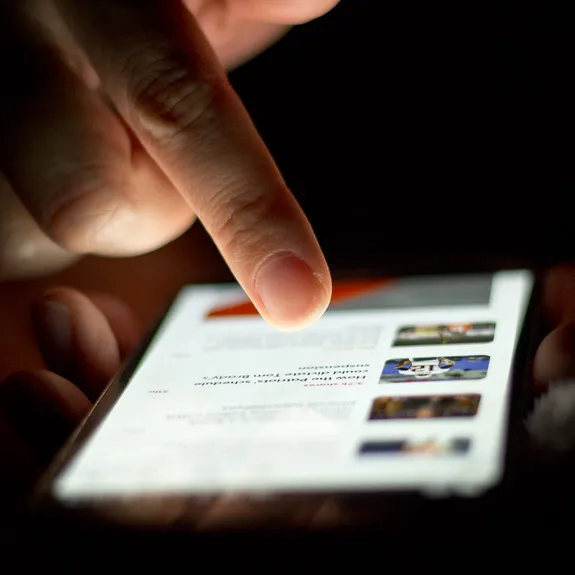
You Have 2,000 Followers and Nobody to Call
There's a specific kind of quiet that hits after you close an app. You were just there — liked, commented on, maybe even quoted in someone's story — and now you're sitting in your apartment and the room feels enormous. It's not sadness exactly. It's more like the emotional equivalent of eating a big bag of chips and realizing you're still hungry.
Welcome to the paradox nobody really wants to talk about: we are the most socially networked generation in human history, and we are profoundly, structurally lonely.
The Algorithm Knows You Better Than Your Friends Do
Here's the uncomfortable part. Your For You page? It's actually pretty good at its job. TikTok, Instagram Reels, YouTube Shorts — these systems are trained on billions of behavioral signals to surface content that makes you feel seen. A video about the specific anxiety of being the first in your family to go to college. A meme about that weird guilt you feel when you cancel plans. A creator talking about their relationship with their mom in a way that makes you pause and rewatch it three times.
Your college roommate probably doesn't know you feel that way. Your coworker definitely doesn't. But the algorithm has quietly pieced it together from your watch history.
Psychologists call this phenomenon "parasocial intimacy" — the sense of closeness we develop with media figures or content that isn't mutual. It's not new. People felt it with radio hosts in the 1940s and talk show hosts in the '80s. But the scale and precision of it now is genuinely different. The content isn't just broadly relatable anymore. It's specifically relatable. And that specificity is doing something to us.
The Performance Problem
While the algorithm learns the real you, you're busy performing a different version of yourself online. This isn't cynical — it's just how social media works. You curate. You crop. You choose the photo where the light is right and the caption that sounds effortless. Over time, the gap between who you are online and who you are at 11pm on a Tuesday starts to widen.
The people following you are connecting with the curated version. And you know that. So even when the likes roll in, there's a low hum of "they don't actually know me" running underneath it. The validation feels good for a minute, then it evaporates, and you go back for more.
This cycle isn't a personal failing. It's baked into the design. Platforms are built to reward performance, not authenticity. And the more you perform, the harder it becomes to just be around people without the invisible pressure of how it might look.
Why Real People Feel Harder Now
Actual human relationships are messy in ways the feed isn't. Your best friend might bring up something you'd rather not discuss. Your sister might not respond the way you need her to. Real people are on their own timelines, with their own emotional weather, and they can't be paused or skipped.
Content doesn't ask anything of you. A podcast host can feel like a close friend who never needs you to show up for them. A creator you've watched for three years feels familiar in a way that requires zero emotional labor on your end. Compared to that, the vulnerability of actually reaching out to someone — of saying "hey, I've been struggling" — can feel disproportionately risky.
Researchers at places like the American Psychological Association have been tracking this shift for years. Social media use, particularly passive consumption, consistently correlates with higher reported loneliness — even when people report feeling connected online. The connection isn't fake exactly, but it's not filling the same need that in-person, reciprocal relationships do.
The Mediated Middle
What's interesting is that most people sense this on some level. There's a reason "touch grass" became a genuine cultural phrase. There's a reason therapy waitlists are months long and "community" has become one of the most overused words in brand marketing. People are hungry for something realer, even if they can't quite name it.
The tricky part is that digital life isn't going anywhere, and it's not entirely bad. Online spaces have genuinely helped people find communities they couldn't access locally — queer kids in small towns, people with rare illnesses, anyone who's ever felt like the only one. That's real and it matters.
But there's a difference between using digital connection as a bridge and using it as a substitute. One gets you somewhere. The other keeps you comfortable in place.
So What Do You Actually Do With This
Honestly, there's no clean fix here. Deleting the apps is a move some people make and some people find genuinely useful — but it's also a little like blaming the fork for overeating. The structure of the problem is social and economic, not just personal.
What might actually help is getting specific about what you're looking for when you open Instagram at 1am. Distraction? Validation? Just something to do with your hands? Because once you can name it, you can at least ask whether the app is actually delivering it — or just simulating it well enough that you keep coming back.
The algorithm is good at making you feel understood. Real relationships are messier, slower, and sometimes disappointing. But they're also the only ones that can actually call you back.
And that still counts for something.